Africa is entering a decade that will define its economic trajectory for the rest of the century. The combination of rising global interest rates, increased climate volatility, geoeconomic fragmentation and a fast-growing population is reshaping the continent’s development challenge. Yet beneath these pressures lies a powerful opportunity: Africa can shift from being primarily a borrower in the global financial system to becoming an active architect of its own capital formation. In a world where the distribution of power increasingly follows the distribution of capital, this shift matters.
This is the strategic horizon informing the African Development Bank’s recent moves under the leadership of Executive Director Sidi Ould Tah and the Bank’s Ten-Year Strategy. The ambition is clear. Africa needs deeper markets, stronger financial institutions and a more coherent architecture for mobilising, allocating and coordinating capital. And it needs them now. By 2050, the continent’s population will exceed 2.5 billion, with almost 60 percent under 25. No region in history has confronted such a demographic surge without first building the financial scaffolding required to absorb it.
Within this framework, the African Development Bank Group (AfDB) has launched two major initiatives aimed at reshaping the continent’s financial future: strengthening African capital markets and creating a continent-wide platform for coordinating development finance. Together, they address the two missing pillars of Africa’s financing architecture: functioning markets and institutional coherence.
Rewiring African Capital Markets
At a recent high-level forum, the African Development Bank Group convened a strategic coalition of stock exchanges, regulators, development finance institutions, central banks and institutional investors to reimagine Africa’s capital markets as a cornerstone of economic transformation.
The AfDB’s capital markets strategy starts from a simple premise: Africa already holds significant capital, but its financial systems do not yet convert it into development. African pension and insurance assets are estimated at more than USD 770 billion, yet much remains concentrated in short-term instruments or government securities rather than productive, long-term investment. Retail savings are also expanding as middle-class populations rise, but these resources are under-leveraged and often held offshore.
To change this, the Bank is deploying a mix of market-deepening tools and catalytic instruments. It is expanding local currency bond markets to reduce exchange-rate risk, modernising regulatory frameworks to strengthen transparency and accelerating regional integration by convening coalitions of stock exchanges and regulators to improve cross-border visibility, liquidity and access for issuers. Recent innovations such as the AfDB’s hybrid capital issuance, partial credit guarantees and support for securitisation are designed to crowd in institutional investors by improving risk-adjusted returns. The African Domestic Bond Fund is helping to build a more reliable benchmark yield curve. And the Bank is encouraging greater use of equity and structured instruments tailored to SMEs, which remain the backbone of job creation.
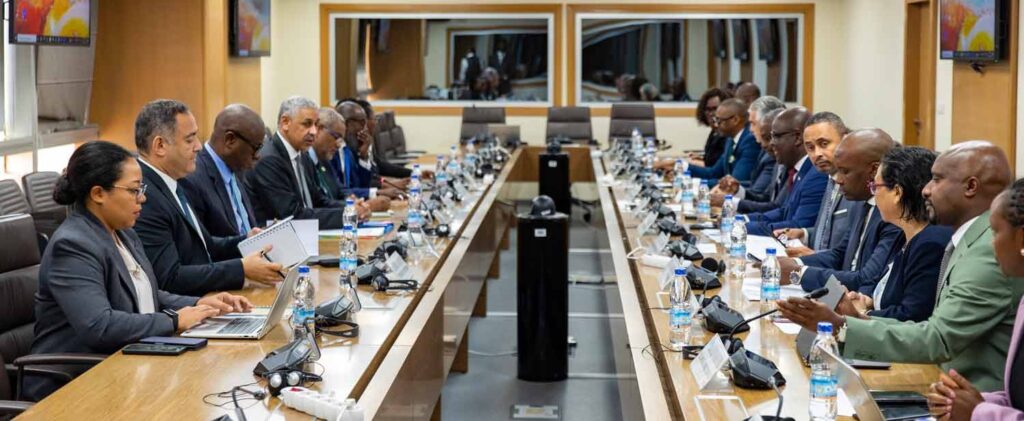
The logic is straightforward. Deeper and more liquid markets lower the cost of capital, expand financing options, attract global investors and give domestic institutions credible long-term assets. Capital markets become development infrastructure as essential as roads, ports or energy grids.
A Pan-African Platform for Coordination
Capital alone is not enough. Africa’s second structural challenge is fragmentation. Too many major projects – from transport corridors to renewable energy systems – are prepared in silos, financed through parallel channels and executed on mismatched timelines. This erodes value, delays scale and weakens investor confidence.
The AfDB’s new Pan-African Financial Coordination Platform aims to fix this. It serves as a continental interface where governments, DFIs, private investors and technical agencies can align financing flows, share project data, coordinate implementation milestones and harmonise technical standards. Its objective is not centralisation but coherence, enabling visibility across project pipelines and sequencing interventions in a way that makes multi-actor projects feasible.
Consider a regional power transmission line involving a government, a private concessionaire, a DFI guarantee and an anchor renewable project. Under current systems, each actor often operates on its own timeline. Under the coordination platform, these elements can be aligned within a unified architecture. The result is faster delivery, reduced duplication and a stronger investment case.
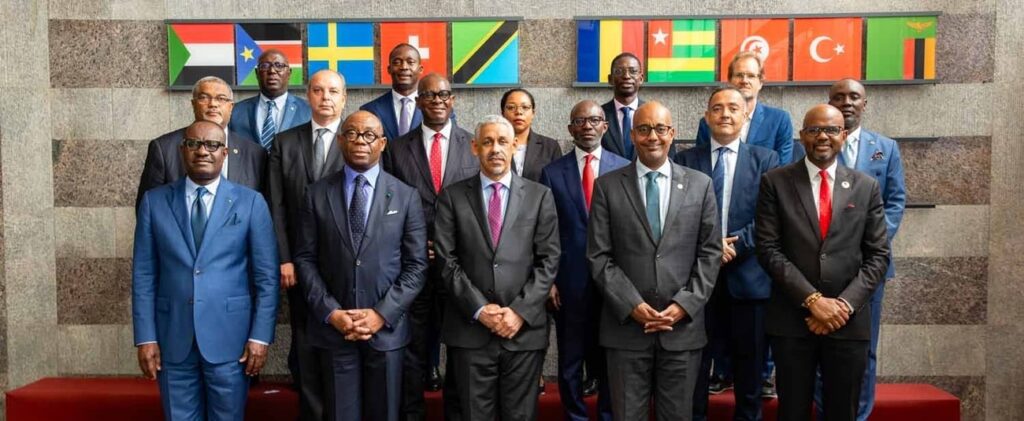
If these reforms are sustained, Africa could enter a new era of financial maturity. Entrepreneurs would gain access to patient equity and mezzanine capital. Pension funds would channel a greater share of their assets into credible domestic vehicles. Municipalities would gain access to local-currency instruments for urban development. Infrastructure developers would benefit from clearer standards and predictable timelines. Gradually, Africa’s position in global capital markets would shift from aid-dependent to investment-driven.
For decades, the continent’s development debate has focused on what Africa lacks. The AfDB’s twin initiatives highlight what it can build: deeper capital markets, stronger institutions and a financing architecture that matches the scale of its demographic and economic ambitions.
The next 25 years will test Africa’s ability to act with discipline, foresight and institutional cohesion. The direction, however, is unmistakable. Africa is no longer waiting for external rescue or legacy development models. It is constructing the mechanisms that every successful region has relied on to transform itself: capital, coordination and confidence.
The continent’s future will be shaped not by the resources it possesses but by the financial systems it creates. And for the first time in decades, those systems are beginning to look worthy of Africa’s potential.
Sources
- African Development Bank Group. (2025). Africa’s financial sovereignty: Mobilizing institutional capital for development and resilience. https://afdb.africa-newsroom.com/press/africas-financial-sovereignty-mobilizing-institutional-capital-for-development-and-resilience?lang=en
- African Development Bank Group. (2025, November). African Development Bank Group moves to bridge Africa’s financing gap with new financial coordination platform. https://www.afdb.org/en/news-and-events/press-releases/african-development-bank-group-moves-bridge-financing-gap-new-financial-coordination-platform-88782
- African Development Bank Group. (2025, November). African Development Bank Group rallies stock exchanges to reinvent Africa’s financial future. https://www.afdb.org/en/news-and-events/press-releases/african-development-bank-group-rallies-stock-exchanges-reinvent-africas-financial-future-88712
- AfricanPact Editorial Team. (2025, August 28). How African public lenders are reshaping capital markets. AfricanPact. https://africanpact.org/2025/08/28/public-lenders-capital-markets-africa/
- AfricanPact Editorial Team. (2025, October 15). BOAD’s Eurobond and the arrival of West Africa’s financial maturity. AfricanPact. https://africanpact.org/2025/10/15/boad-eurobond-west-africa-financial-maturity/
- Organisation for Economic Co-operation and Development. (2025). Africa capital markets report 2025: The role of insurance companies and pension funds as institutional investors in African capital markets. https://www.oecd.org/en/publications/africa-capital-markets-report-2025_7d26e1d3-en