For more than a decade, Côte d’Ivoire has been one of West Africa’s most resilient and fastest-growing economies, driven by post-crisis reconstruction, infrastructure investment and a diversified export base anchored in cocoa, cashew and services.
Today, the government is pursuing an ambition of unprecedented scale: transforming the world’s top cocoa producer into one of Africa’s top five oil and gas powers by 2035, with projected crude output of 500,000 barrels per day and natural gas production reaching 1 million cubic feet per day. If realised, this would mark one of the continent’s most significant energy pivots, shifting Côte d’Ivoire from agricultural powerhouse to integrated hydrocarbon and industrial hub.
The core question remains: can Côte d’Ivoire convert new energy wealth into broad-based, long-term development?
From Baleine to 500,000 Barrels: The New Momentum
The country’s confidence is anchored in major offshore discoveries, led by the Baleine field operated by Eni. Identified in 2021 across blocks CI-101 and CI-802, Baleine ranks as the largest hydrocarbon discovery in Ivorian history, with estimated resources of 2.5 billion barrels of oil and 3.3 trillion cubic feet of associated gas in place. Production began in 2023, making it one of the fastest upstream developments in West Africa.
The upstream pipeline is now expanding. Additional prospects such as Calao, together with interest from Vaalco Energy, Petrobras and the national oil company Petroci, are expected to lift output to about 200,000 barrels per day by 2027–2028. The government views these developments as a foundation to reach its 2035 aim of 500,000 barrels per day, a target intended to position Côte d’Ivoire among Africa’s top oil producers.
This strategic shift is also driven by the need to diversify away from cocoa, mitigate exposure to commodity risks and secure reliable energy for industrialisation. Gas, already a core component of the electricity mix, could play a central role in enhancing national energy security and possibly enabling regional energy exports, provided infrastructure and demand materialise.

The Development Question
Beyond Barrels: What Will Ultimately Decide the Outcome?
Africa’s recent history offers two opposing lessons:
- Ghana’s Jubilee experience exposed the risks of weak fiscal rules.
- Botswana demonstrated how disciplined institutions and long-term savings can turn natural resource wealth into national progress.
Côte d’Ivoire sits between these models: stronger than many peers, but not fully insulated from governance risks.
Three structural conditions will shape the country’s trajectory.
Condition 1: Revenue Governance and Sovereing Savings
Côte d’Ivoire enters the hydrocarbon era with improved macroeconomic management but limited fiscal buffers. President Ouattara’s 2025–2030 programme calls for the creation of a sovereign wealth fund designed to smooth revenues, build long-term savings and support strategic sectors.
For this vehicle to anchor stability, it must operate under clear deposit and withdrawal rules, independent oversight and transparent reporting. When well governed, it can help the country avoid the boom-and-bust cycles that have destabilised several African producers.
See From Diamonds to Diversification: Botswana’s Next Chapter
Condition 2: Domestic Gas as a Strategic Industrial Input
Unlike crude oil, which is primarily export-oriented, natural gas has the potential to reshape domestic production systems. Already powering more than 70 percent of the national electricity mix, increased gas supply can support industrial park expansion, agro-processing, fertiliser production, petrochemicals, logistics and regional electricity exports.
This integrated gas-to-industry strategy mirrors successful approaches in Egypt and, to an extent, Algeria. A well-coordinated gas-to-industry strategy could become the backbone of a more diversified, competitive economy.
See Simandou: Guinea’s Megaproject
Condition 3: Local Content and Workforce Transformation
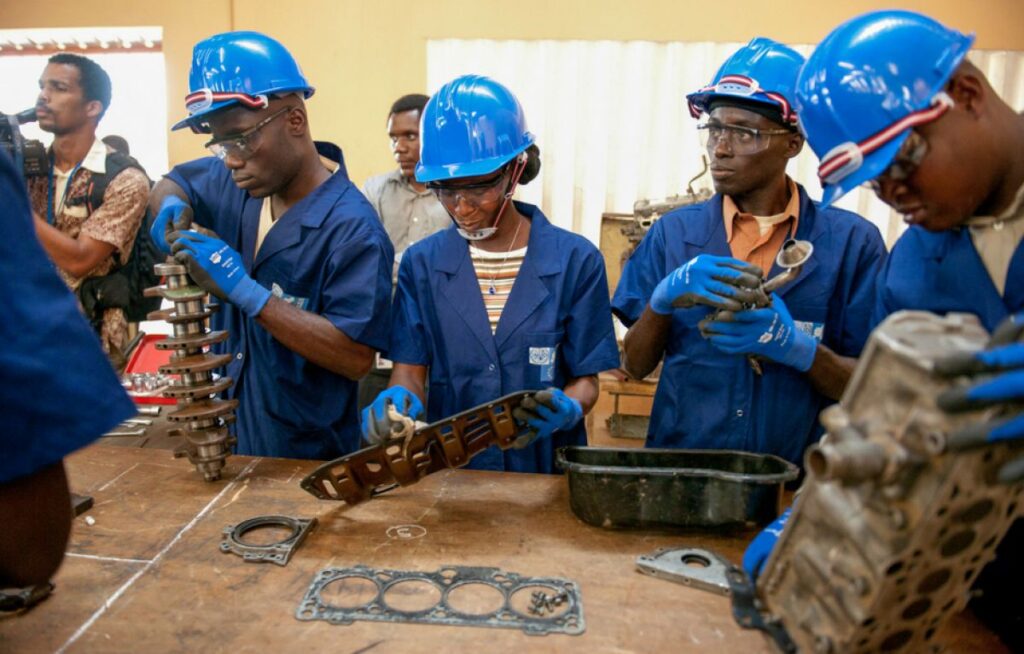
The decisive factor in Côte d’Ivoire’s 2035 ambition will be its ability to build a skilled workforce and a nationally anchored supply chain. The local content framework, centred on Law 2022-408 and its implementing decrees, obliges operators to employ more Ivorian nationals, develop domestic suppliers and invest directly in training and certification. A digital compliance platform reinforces transparency, while institutions such as the Higher School of Petroleum and Energy (ESPE – INPHB) are helping supply the necessary engineering talent.
Demography heightens the stakes. With more than 60 percent of the population under 25, the hydrocarbon sector offers pathways into high-quality technical employment, but only if training systems scale quickly and access remains broad-based. Rising inequality inside the country adds a critical layer of complexity. Without deliberate inclusion mechanisms, the benefits of new oil and gas activity could concentrate within a small circle of firms, intermediaries and elites, widening socio-economic divides at a time when youth expectations are increasing. Ensuring that local content benefits young Ivorians across regions, education levels and social groups is essential for both economic fairness and long-term social and political stability.
See Building futures: education in a rapidly growing Africa
An Ambition built on Institutions
Côte d’Ivoire’s 2035 hydrocarbon ambition is, above all, a test of institutional discipline. Oil and gas can expand fiscal space, accelerate industrialisation and strengthen regional leadership, but their transformative impact will depend on the quality of governance, the strategic use of gas and the meaningful integration of Ivorians into the sector.
The coming decade will determine which path prevails.
References
- APA News. (2025, October 2). Côte d’Ivoire: Ouattara promet de créer un fonds souverain. APA News
- World Oil. (2025, June 20). Ivory Coast sets ambitious targets to boost oil production by 2035. World Oil.
- Bloomberg. (2025, November 26). Ivory Coast sees oil, gas spurring growth in next five years. Bloomberg.